Meeting the 'Settlers': Jewish Farmers, Body Cameras, and the Story the World Isn't Telling
I met the Jewish farmers the headlines call settlers and heard their stories firsthand. Now an American Christian is putting body cameras on shepherds to show the world what really happens in Judea and Samaria.
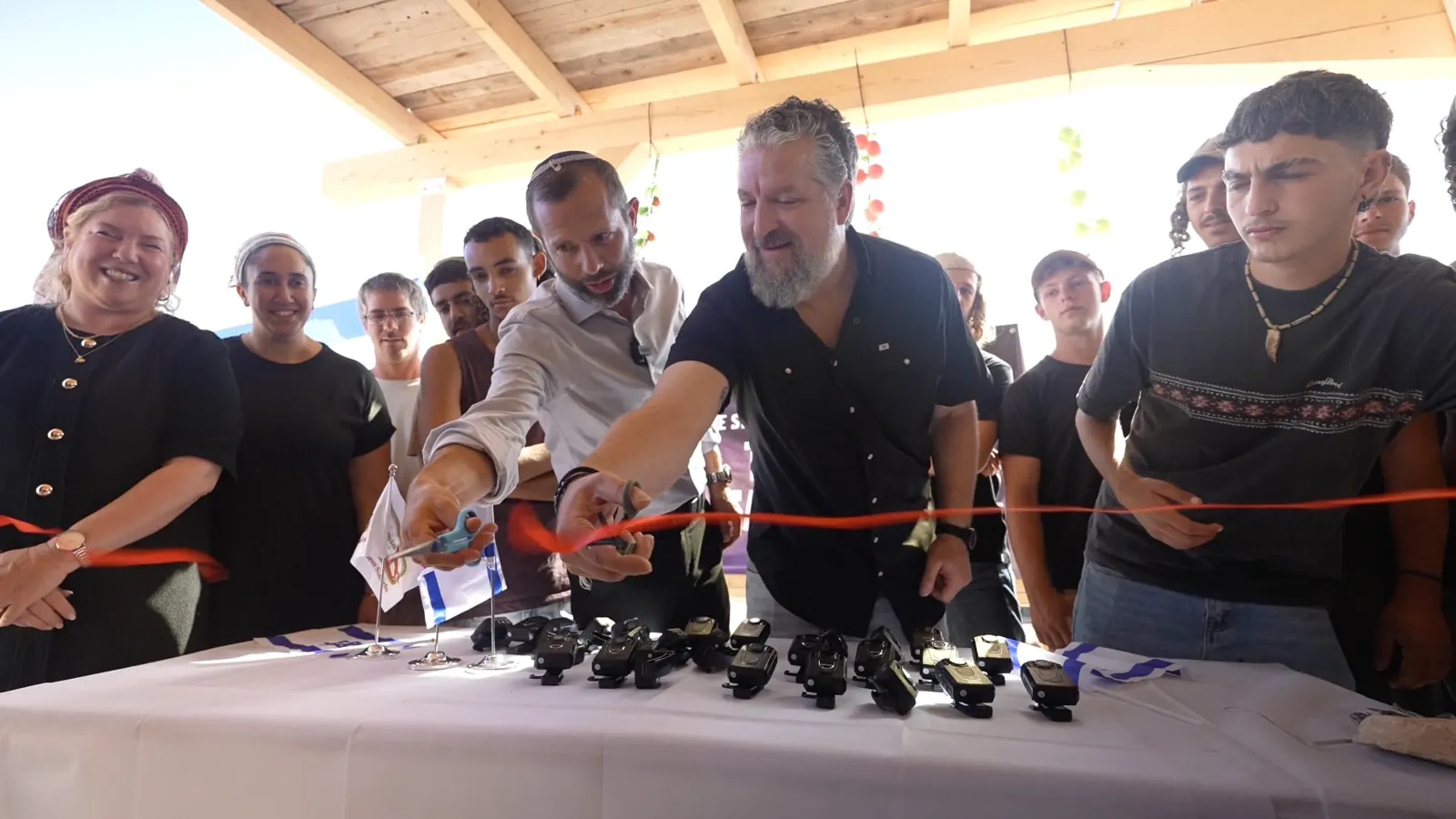
The headlines call them "settlers." Before this assignment, that word was all most people back home had ever heard about them. I count it a real privilege that I got to meet them in person, sit at their tables, walk their fields, and hear their stories firsthand. What I found were Jewish farmers and young families moving back to their historic homeland in Judea and Samaria, the biblical heartland where so much of the Jewish story was first written.
This feature for CBN News and Jerusalem Dateline took me into the hills of the Binyamin region, where the farmers I met say the world is getting their story badly wrong. Now an American Christian is helping them push back, one body camera at a time.
Two Very Different Stories
The United Nations says violence by Israeli settlers against Palestinians has reached record levels. Ramiz Alakbarov of UNSCO put it this way: "So far this year the UN has documented more than 1,430 incidents involving Israeli settlers that resulted in casualties, property damage or both, affecting approximately 260 Palestinian communities."
The Israeli organization Regavim sees it differently. After reviewing more than 8,000 cases in the UN's database from 2016 through 2023, the group says most had nothing to do with violent attacks by Jewish residents. "More than 95% of these cases out of the more than 8000 cases, more than 95% had nothing to do with settlers," Regavim director Meir Deutch told me. "And it had nothing to do with violence."
Yehuda Twersky, director of development for Binyamin, described what it's like to read about himself in the news: "Almost every day I open up the news and I hear some news stories about how I'm trying to kill the Arabs here in the area or poison their water systems. And it's just, it's unbelievable. I can't connect the stories to the reality and to the facts."
Standing in those hills, I said it on camera and I'll say it again here: for Jewish families living in Judea and Samaria, their side of the story is not being told.
The Violence Nobody Covers
What troubles me most is how little attention violence against Jews in Judea and Samaria receives. Attacks on Palestinians, real or alleged, are reported around the world within hours. Attacks on Jewish farmers, shepherds, and families rarely make it past the local Israeli press. The imbalance isn't subtle, and after meeting the people on the receiving end, I can't unsee it.
On one cattle ranch, Dror and Bat-Chen Granvitz are raising two young boys. Over four years they've built up their herd, and their work has come with real danger. One Shabbat, Dror's shepherd told him that Arabs from a nearby village were attacking two Jewish ranchers. He called the police, the army, and the security forces, then rushed to help. "He took a metal post, six meters, and hit me in the head," Dror told me. The blow knocked him unconscious and sent him to the hospital.
Bat-Chen was left home alone with the children. "I was the only adult in the farm at this point," she said. "So it was a few hours of, I don't know what's happened, but I need to show to my kids that everything is okay."
They are not the only ones. A 23-year-old shepherd, married and a father of two, whose face we concealed for his safety, was attacked just weeks after the October 7th massacre. "It took over half a year, lying in a bed in the hospital, learning to do basic things from the beginning to move my hands," he told me. He went back to the hills anyway. "You can never lay your head down and rest because you always have to be on guard... It happens all the time."
Binyamin Regional Council Governor Yisrael Gantz told me incidents spike during the harvest season. "In the last week, we faced more than about, I will say, about 50 terror attacks against our farmers," he said, compared to about 20 the week before. He added that attackers are also using photos and video to cast the farmers as the aggressors.
Making the Land Blossom
Here is what I want readers to understand. These families are not looking for a fight. They want what any of us want: to raise their children, build a home, and make an honest living. They work the land. They improve it. Hillsides that sat barren for generations are green again with pasture, orchards, and flocks. Watching them, I kept thinking of the prophet's words that the desert would blossom like a rose.
Bat-Chen said it better than I can: "Every time someone asks me why I live on a farm, I say that it's for my kids. Everything that we're doing here, the mission, the Zionism mission is for my kids, my kids, everyone else's kids, it's for the next generation. So I wish for my kids to be able to feel safe in our land."
Meanwhile, in my view, many of their Palestinian neighbors are being radicalized by the Palestinian Authority. The PA's schools and curriculum teach children to glorify violence, and the PA rewards terror. When children are raised on that kind of education, too many of them grow up to become terrorists. That is the part of this conflict that rarely makes the evening news, and it is a tragedy for Palestinian children and Jewish families alike.
Cameras on Every Shepherd
That gap between the headlines and the hills is what drove American Christian activist Luke Moon, founder of Generation Zion, to act.
So I'm seeing all these news reports on settler violence. I mean, so many of them. We're talking like CNN, NBC... All the big outlets are all running the same story, settler violence, settler violence, settler violence. And I'm like, they're not telling the truth. I know they're not telling the truth because I know the people they're interviewing, and I know the other side.
Luke's answer was simple. The farmers needed a way to document what happens before, during, and after an incident. "I need to be able to change this story. Nobody can get me video," he told me. "And I'm like, guys, what do I got to do? I got to get cameras on every shepherd boy out there."
So he is. Through Generation Zion, Luke is helping put body cameras on Jewish farmers and shepherds across the region. Just as police body cameras document encounters, he hopes these will give a fuller record of what happens in the fields, and maybe stop attacks before they start.
My hope is obviously for less violence here in Judea and Samaria. I think that's the hope of everybody here, right? But the way we get there is by having more information on the ground. People behave differently when there's cameras around. They just do.
Dror sees the cameras as a kind of protection. "No one can tell you fake news on you," he said. "No one can say that you attacked him while you're having a camera." You can follow Luke's work on Instagram and support the effort through Generation Zion.
Why I Keep Telling These Stories
The story of settler violence in Judea and Samaria is sometimes just that, a story. My job is to ask what the truth is. Meeting these families, I saw courage, faith, and a deep love for the land God promised their ancestors. I'm grateful they trusted me with their stories, and grateful to Luke for making sure the world can finally see their side with its own eyes.
Now, with the cameras rolling, I hope the world starts paying attention.
Keep reading
Browse all writing →
Tragedy, Resilience, and Hope: My Conversation With Rabbi Leo Dee
In Efrat, I met a father who lost his wife and two daughters to terrorism. His grief was sobering. His resilience, faith, and hope were deeply encouraging.
UK Terror Plot Suspects Out on Bail as Trump Denies Iran Offer
Five suspects arrested near a British air base used by American bombers are out on bail, drawing a sharp response from President Trump, as Washington and Tehran trade messages over a possible nuclear agreement. Aired on The 700 Club.

Dead Jew, No News? A Yom Kippur Attack and the Stories the World Misses
Two attacks in two days left an Israeli father dead and a reservist fighting for his life. The violence was real. So was the silence surrounding it.