Will the BDS Movement Make Its Way Into the Boardroom?
The campaign to boycott Israel started on campus and moved into politics. Now it is knocking on the doors of corporations and investment funds, where the numbers tell a different story.
For years, the movement to boycott Israel was most visible on college campuses.
Students occupied buildings. Protesters disrupted lectures. University boards faced demands to divest from companies doing business with Israel. The language of BDS, Boycott, Divestment and Sanctions, became familiar across American and European universities.
Then the movement moved into politics.
Now comes the next question.
Will it make its way into the boardroom?
That question matters because Israel is not simply fighting a military war or a diplomatic one. There is also an increasingly consequential battle over investment, trade, research partnerships and whether companies should continue doing business with the Jewish state.
I recently looked at that question for CBN News, speaking with investors, political leaders and analysts about what happens when the campaign to isolate Israel collides with the realities of the global economy.
What emerged was an interesting contradiction.
The political pressure surrounding Israel is growing.
At the same time, Israel continues to attract investment, create technology and build companies that the rest of the world wants to buy.
From the Campus to City Hall
The progression is not difficult to trace.
Dr. Charles Asher Small, executive director of the Institute for the Study of Global Antisemitism and Policy, sees universities as especially important because they shape the people who eventually occupy positions of influence in media, government and business.
“Revolutionaries know. They know. If you want to change the society, you start at the universities. These are our future professors, journalists, leaders of industry.”
He also pointed to the enormous amount of foreign money flowing into American higher education.
“Qatar is a small country in the Middle East of about only 300,000 people, and they give more money to American universities than any other country in the world.”
The latest disclosures from the U.S. Department of Education support the broader point. Qatar was the largest foreign source of reportable gifts and contracts to American universities in 2025, accounting for more than $1.1 billion.
Small’s concern is what happens when ideas cultivated on campus leave the campus.
That is no longer theoretical.
New York City Mayor Zohran Mamdani has long been publicly critical of Israeli government policy and supportive of the BDS movement. His administration also revoked a late executive order from former Mayor Eric Adams that prohibited certain city personnel from participating in boycotts or divestment targeting Israel. Mamdani has said the decision was part of a broader reversal of executive orders Adams issued after his federal indictment.
That change matters because the economic relationship between New York and Israel is substantial.
In May 2025, Adams and Israeli Economy Minister Nir Barkat established the New York City Israel Economic Council to encourage business partnerships and Israeli investment in areas including artificial intelligence, life sciences and environmental technology.
The debate is also playing out in national politics.
Michigan Democratic Senate candidate Abdul El Sayed has challenged American financial support for Israel, framing the issue around domestic priorities.
“The question about whether Israel has a right to exist is actually quite secondary to whether or not they have a right to our tax dollars.”
His broader position is that American tax dollars should be directed toward domestic priorities rather than military assistance to foreign governments, including Israel. Recent interviews have shown him making that case explicitly.
Whatever one’s political position, something important has changed.
The argument over Israel is increasingly an argument about money.
The Question Facing Investors
That brings us to the boardroom.
Michael Fertik is managing partner at Verdict Capital. He has spent much of his career looking at companies through the relatively unforgiving lens of investment.
Politics may influence markets, but markets eventually ask a simpler question.
Does the investment make sense?
Fertik told me that pressure against Israel is already affecting economic decisions.
“Now, for reasons of political bent, propaganda, antisemitism, or otherwise, or just mistake, there are people who want to put the brakes on anything to do with Israel. And that could be academic research or collaboration, that could be investment.”
That is the part of the BDS story that deserves more attention.
A protest outside a grocery store is visible.
An investment committee quietly deciding not to consider an Israeli company is not.
A university ending a research partnership may receive a headline.
A venture capitalist deciding that Israeli founders are simply too politically complicated may never become public at all.
Those decisions are much harder to measure.
Yet Fertik believes something interesting happens when investors move beyond politics and examine the numbers.
“I think that among people who care about business first, the information war is being won by the people sympathetic to Israel. Because the business case for Israel is inarguable.”
He is putting his own money behind that conclusion.
Fertik told me his Verdict Fund One will invest in high technology companies in the United States and Israel, with roughly fifteen percent of the fund expected to go into Israeli startups.
That represents a significant increase in his own financial commitment to the Israeli economy.
It is not exactly what one would expect to see from a country supposedly becoming economically isolated.
Israel Keeps Building
The broader numbers tell a similar story.
The Bank of Israel’s July 2026 forecast projects GDP growth of four percent this year and five and a half percent in 2027. The bank also cautions that substantial uncertainty remains because of regional security developments and government spending.
That does not mean Israel’s economy has escaped the effects of war.
Far from it.
Reserve duty removes workers from companies. Conflict disrupts tourism, transportation and ordinary commerce. Defense spending rises. Businesses face uncertainty that companies in quieter corners of the world simply do not.
But resilience does not mean the absence of pressure.
It means continuing to function under it.
Fertik sees that happening in Israeli technology.
“I’m very excited to see that, in spite of all the naysayers, wherever they may come from, Israel seems to go from strength to strength in its high tech startup scene. And the exits seem to be accelerating. The value of the exits seems to be growing.”
That may ultimately be one of the greatest challenges facing efforts to economically isolate Israel.
The products coming out of this country are often things the global economy actually wants.
The American Side of the Equation
There is another part of this conversation that often gets lost.
Israeli companies entering the American market do not simply sell products to Americans.
They become American employers.
Gabe Groisman, the former mayor of Bal Harbour, Florida, now works with Israeli companies seeking to establish operations in the United States.
“You can’t help but understand the economic diplomacy aspect of Israeli companies opening entities in the U.S. to serve the U.S. market.”
Then he asked the questions that rarely appear on protest signs.
“How many Americans that employs, how many dollars it actually brings to the pockets of Americans, how the products and services that they’re creating help improve American lives?”
That relationship runs both ways.
Groisman recently spent time meeting Israeli companies in Tel Aviv, and he told me that virtually every company he encountered was developing technology with the American market in mind.
This is where the BDS debate becomes considerably more complicated than removing a product from a supermarket shelf.
Modern economies are deeply interconnected.
An Israeli company may employ engineers in Tel Aviv, executives in Manhattan, salespeople in Texas, investors in California and customers scattered across the world.
What exactly does it mean to boycott a company like that?
And who absorbs the economic consequences?
Three Hundred Cranes
U.S. Ambassador to Israel Mike Huckabee offered me a considerably less sophisticated economic indicator.
Construction cranes.
“The stock market, since October the 7th, is up 100 percent. It’s a very vibrant economy, and if one just goes to a high point of lookout in Jerusalem and looks out, you will see 300 cranes building things around Jerusalem.”
Then came the line that stuck with me.
“If your country is dying and falling apart, the cranes aren’t gonna be there building anything. You’ll see big wrecking balls tearing stuff down.”
Living in Jerusalem, I understand the crane argument.
It is impossible not to notice them.
They rise above neighborhoods across this city. Apartment buildings are going up. Roads are being expanded. Infrastructure is being built. Entire sections of Jerusalem seem permanently accompanied by the soundtrack of construction.
Cranes are not a sophisticated economic metric.
But they are difficult to ignore.
Countries that believe they have no future generally do not spend enormous amounts of money building one.
So Will BDS Reach the Boardroom?
In some places, it already has.
Political attitudes toward Israel are affecting universities, investment discussions, municipal policy and corporate decision making.
The more important question is whether those pressures can substantially alter the underlying economic relationship between Israel and the rest of the world.
That remains uncertain.
Political resistance to Israel has clearly grown in some Western institutions.
At the same time, investors continue putting money into Israeli companies. Israeli entrepreneurs continue pursuing American customers. International businesses continue relying on Israeli innovation. And Israel’s central bank continues forecasting economic growth.
That tension may define the next phase of the BDS movement.
It began largely by asking individuals not to buy Israeli products.
It expanded into universities.
Then politics.
Now it is knocking on the doors of corporations and investment funds.
But boardrooms operate differently from protest movements.
Eventually somebody opens the spreadsheet.
And when they do, the question becomes less ideological and considerably more practical.
What happens if we stop doing business with Israel?
Increasingly, the answer involves more than Israel.
It involves American employees, American investors, American consumers and technologies woven deeply into the global economy.
From Jerusalem, perhaps the simplest observation is still the most compelling.
Israel remains under extraordinary pressure.
But the cranes are still moving.
Keep reading
Browse all writing →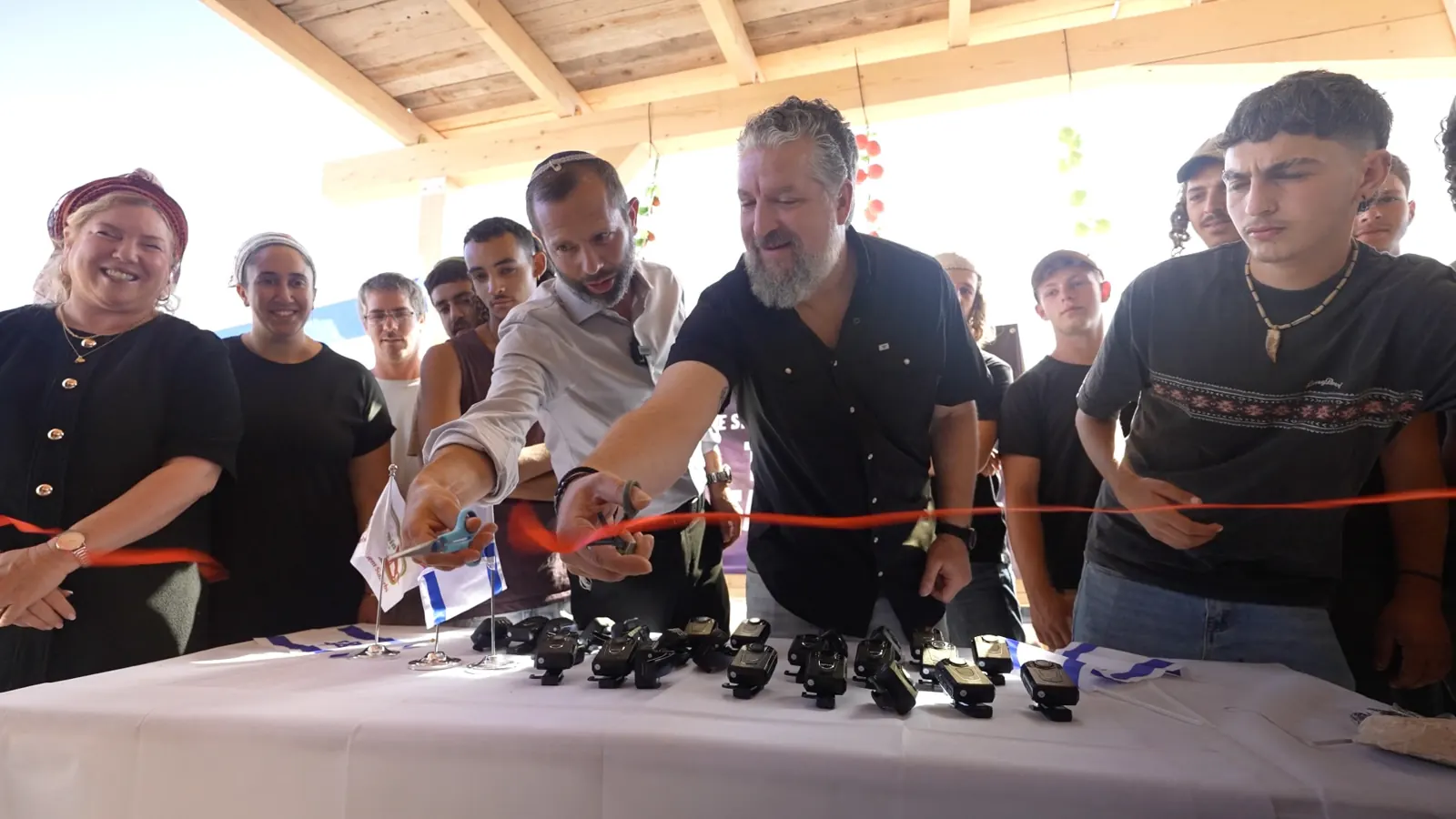
Meeting the 'Settlers': Jewish Farmers, Body Cameras, and the Story the World Isn't Telling
I met the Jewish farmers the headlines call settlers and heard their stories firsthand. Now an American Christian is putting body cameras on shepherds to show the world what really happens in Judea and Samaria.

Tragedy, Resilience, and Hope: My Conversation With Rabbi Leo Dee
In Efrat, I met a father who lost his wife and two daughters to terrorism. His grief was sobering. His resilience, faith, and hope were deeply encouraging.

UK Terror Plot Suspects Out on Bail as Trump Denies Iran Offer
Five suspects arrested near a British air base used by American bombers are out on bail, drawing a sharp response from President Trump, as Washington and Tehran trade messages over a possible nuclear agreement. Aired on The 700 Club.
More from Jerusalem
Tragedy, Resilience, and Hope: My Conversation With Rabbi Leo Dee
UK Terror Plot Suspects Out on Bail as Trump Denies Iran Offer

Dead Jew, No News? A Yom Kippur Attack and the Stories the World Misses