A Voice From the Desert: The Great Isaiah Scroll and the Caves of Qumran
Standing before the Great Isaiah Scroll and hearing Dan Farkash describe his priestly connection to Qumran made these stories deeply personal for me.

Some stories stay with me long after the cameras stop rolling. Reporting on the Great Isaiah Scroll at the Israel Museum and on the caves of Qumran was one of those experiences. I have spent years telling stories from Israel, but being so close to a manuscript that carried the words of Isaiah across more than two thousand years felt deeply personal and profoundly spiritual.
For our CBN News report, I visited the Israel Museum for a rare look at the complete scroll, while Chris Mitchell traveled to Qumran to explore the place where it survived. Together, the two stories connected a sacred text, the modern rebirth of Israel and a remarkable encounter with a man whose own family heritage reaches back to the priesthood.
Standing in the presence of the scroll
The Great Isaiah Scroll is about 2,100 years old. More than seven meters long, it contains all 66 chapters of Isaiah across 17 sheets of animal skin sewn together. Seeing the handwriting, corrections and stitching left by ancient scribes made the distance between their world and mine feel unexpectedly small.
The complete original had not been displayed since 1968. It is so sensitive to light and environmental conditions that showing it in full may happen only once in a generation. Hudz Maoz and the Israel Museum team created an extraordinary exhibition, “A Voice from the Desert,” that allowed the scroll to speak without turning it into a mere museum object.
The exhibition was conceived after October 7 and presented during a time of war. Standing there, Isaiah’s words carried a weight I could feel: “Comfort, comfort My people,” alongside the promise that swords will one day be beaten into plowshares. These were not distant lines from an ancient world. They spoke directly into the grief, hope and longing for peace that surround us in Jerusalem today.
A discovery woven into Israel’s story
The timing of the scroll’s modern discovery has always amazed me. Bedouin shepherds found the first scrolls near Qumran in 1947. On November 29 of that year, as the United Nations voted to allow a Jewish state to be established, Hebrew University archaeologist Eleazar Sukenik was examining scrolls that had emerged from the Judean Desert. An ancient prophetic manuscript was returning to Jewish hands at the very moment Israel’s modern future was being decided.
The story continued in 1954, when several manuscripts appeared for sale in a classified advertisement in The Wall Street Journal. Sukenik’s son, Yigael Yadin, secretly arranged their purchase for Israel. Even the surviving EL AL receipt feels like part of the testimony. The scroll traveled through caves, war, scholarship and an unlikely newspaper advertisement before coming home to Jerusalem.
Qumran, a priest and a remarkable connection
At Qumran, Chris interviewed National Park manager Dan Farkash. Dan described the ancient settlement as Yachad, a gathering place for a disciplined Jewish community commonly associated with the Essenes. Its members studied and copied sacred writings, and ritual purification was woven into daily life, including before writing the name of God. The dry caves nearby protected thousands of fragile fragments for two millennia, including the Great Isaiah Scroll and six other scrolls found in Cave One.
Then the story became even more personal. Dan is a Kohen, a descendant of the Jewish priestly line. He had also appeared in CBN’s film “Oracles of God.” During filming, he stepped into an ancient mikvah at Qumran that had been temporarily filled with water. He described himself as the first Kohen to immerse there since the Second Temple period. To have that man become our interview subject felt like more than fortunate scheduling. To me, it felt divinely ordained.
Why these stories meant so much to me
I am grateful whenever my work allows me to stand where history happened. This assignment gave me something more. At the museum, I stood in the presence of a scroll whose words have shaped Jewish and Christian faith for centuries. At Qumran, our team met a priestly descendant whose own story formed a living bridge to the world those ancient ruins represent.
Isaiah wrote about judgment and hope, destruction and restoration, war and peace. Those themes are not abstract in Israel. They are part of the landscape and part of daily life. Working on these stories reminded me that journalism can do more than explain what happened. At its best, it can help us recognize meaning, preserve memory and notice the hand of God moving through history.
The Great Isaiah Scroll survived in a desert cave for roughly two thousand years. Now its voice is being heard again in Jerusalem and around the world. I feel deeply grateful that I was able to stand near it, help tell its story and be reminded that the words carried across those centuries still speak.
Keep reading
Browse all writing →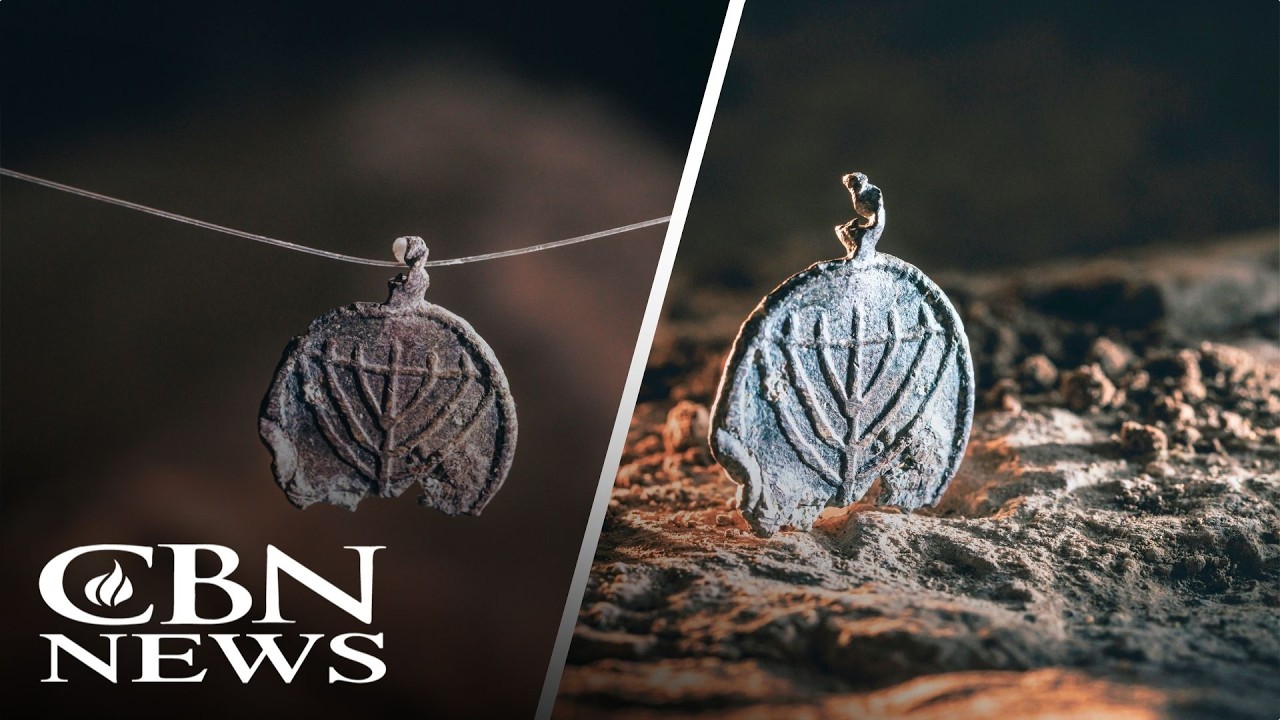
A Tiny Menorah and a Very Long Memory
A 1,300 year old lead pendant found beneath the Temple Mount carries a menorah on both sides, and a story that outlasted empires.
The Stones Still Speak: Beauty From Ashes at Bethsaida
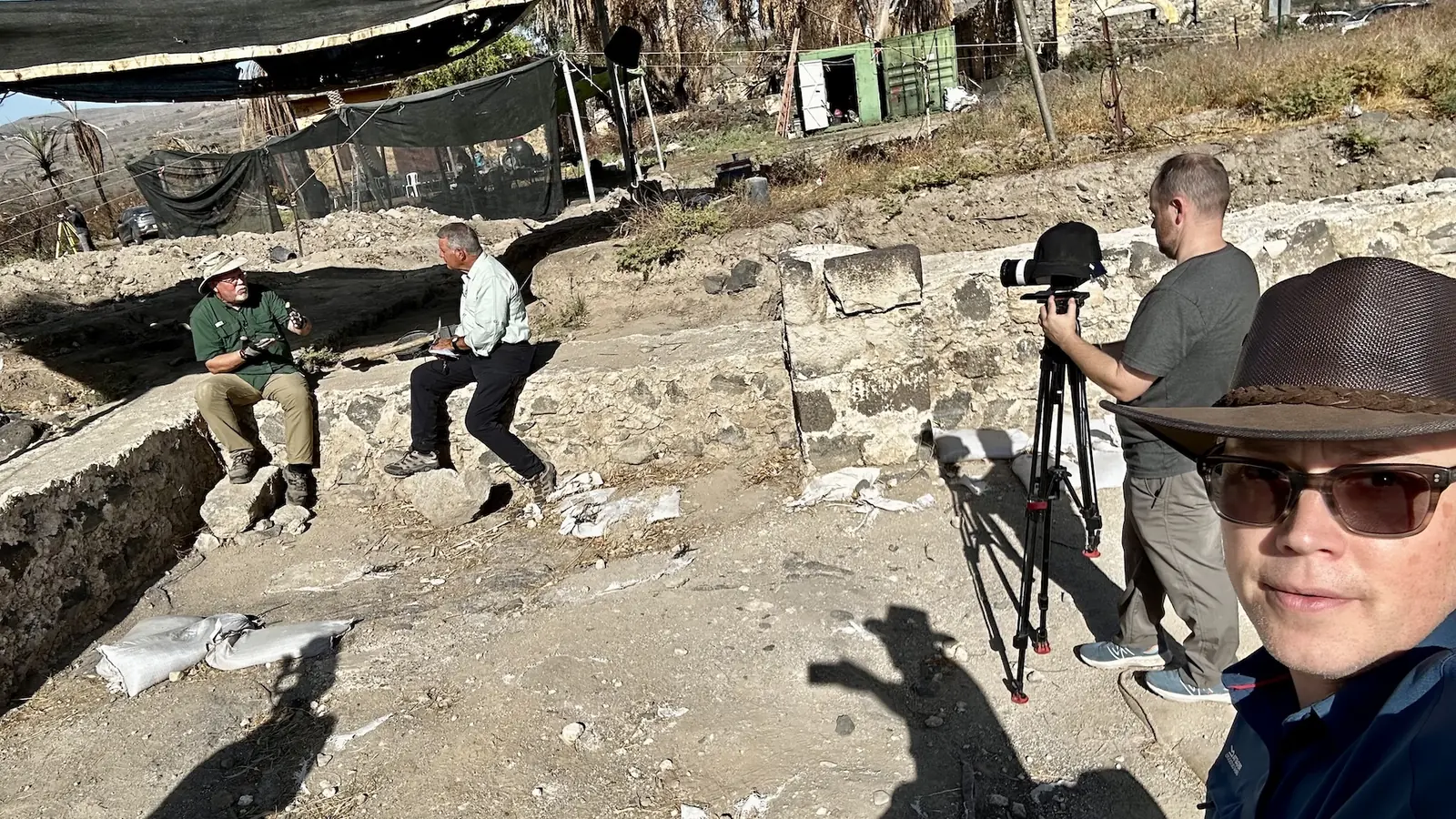
A wildfire swept across el Araj, the site many believe is biblical Bethsaida, exposing more of the fishing village where Peter, Andrew, and Philip began their lives.

Tragedy, Resilience, and Hope: My Conversation With Rabbi Leo Dee
In Efrat, I met a father who lost his wife and two daughters to terrorism. His grief was sobering. His resilience, faith, and hope were deeply encouraging.
More from Jerusalem
The Stones Still Speak: Beauty From Ashes at Bethsaida
Tragedy, Resilience, and Hope: My Conversation With Rabbi Leo Dee

UK Terror Plot Suspects Out on Bail as Trump Denies Iran Offer
