1,000 Pastors Visit Judea and Samaria in What Could Mark a Historic Turning Point for the Church
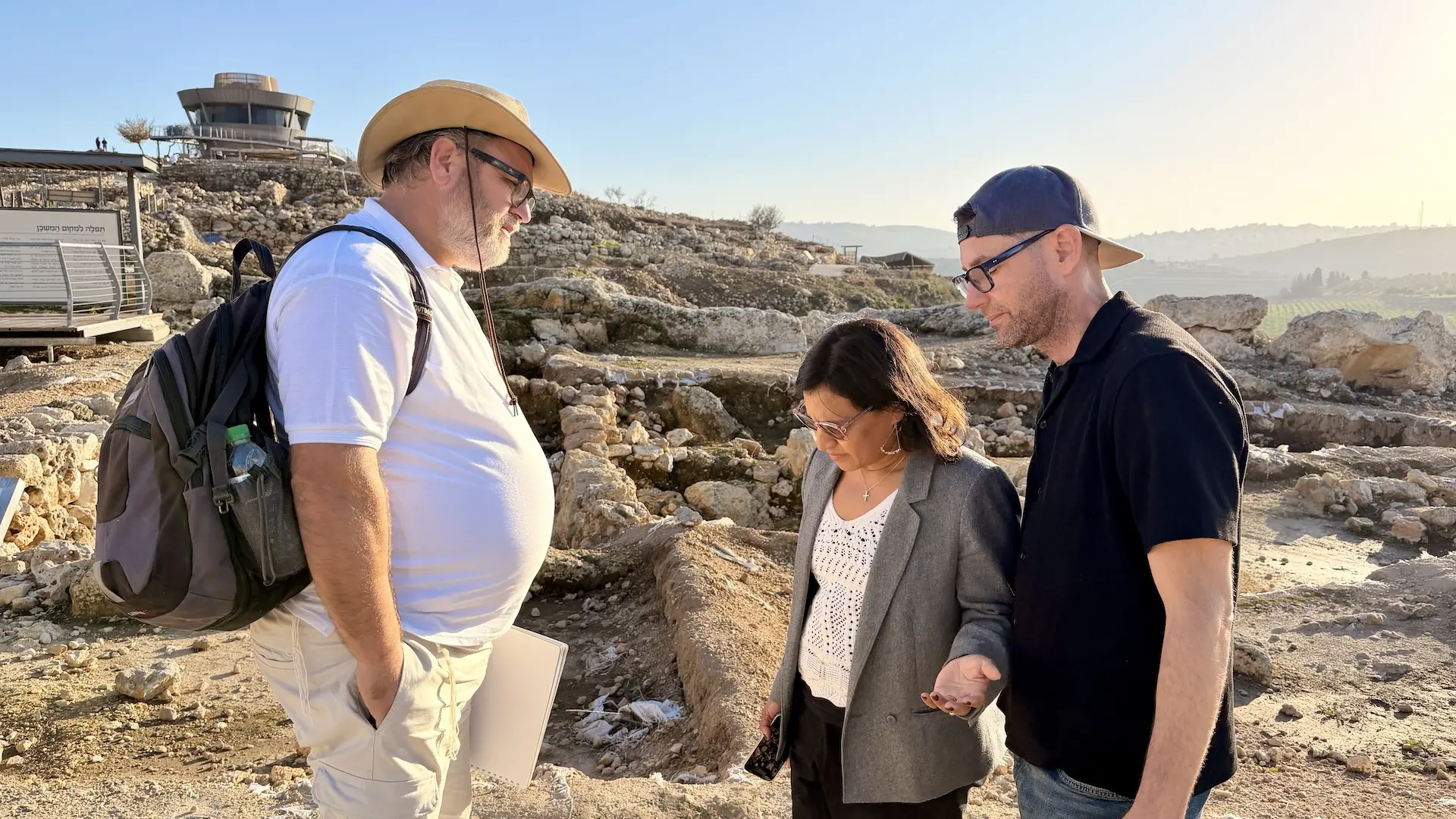
Reporting from ancient Shiloh, I joined more than 1,000 pastors and Christian influencers exploring the biblical heartland and its significance for the Church and Israel.
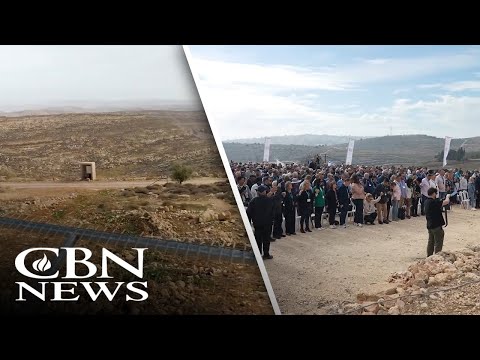
Standing in ancient Shiloh, surrounded by more than 1,000 Christian pastors and influencers from around the world, I couldn't help but recognize the significance of the moment. Here, in the biblical heartland of Israel, where the Tabernacle once stood and the Israelites worshiped the God of Abraham, Isaac, and Jacob, something remarkable was happening.
I was in Shiloh, Samaria, reporting for CBN News and Jerusalem Dateline on a gathering that could signal a turning point in how the global Church understands its relationship with Israel and the biblical lands of Judea and Samaria.
The pastors had traveled to Israel as part of a historic Friends of Zion tour, organized by Dr. Mike Evans, founder of the Friends of Zion Museum in Jerusalem. But this wasn't simply another tour of the Holy Land. These Christian leaders had come to see the land for themselves, connect with its biblical history, and send a message that organizers hoped would reach all the way to the White House.
And that message was unmistakable: Judea and Samaria are Bible lands, and these Christian leaders believe Israel should have sovereignty over them.
Two Names, One Contested Land
As a journalist living and reporting in Jerusalem, I've come to appreciate just how much the names we use to describe this region reveal about our understanding of its history.
Much of the international community calls the territory the West Bank, a name associated with Jordan's former control of the area before Israel captured it during the 1967 Six Day War.
But in the Bible and Jewish tradition, this region is known as Judea and Samaria. These are the hills where Abraham walked, where Joshua led the Israelites into their inheritance, and where much of the biblical story unfolded.
For many Christians, these locations are familiar names from Sunday school lessons and Bible studies. But standing here, you quickly realize they aren't just stories on a page. They are actual places, with real geography, history, and people.
And today, they are at the center of one of the world's most contentious political and theological debates.
A Message from Shiloh to the White House
One of the most powerful moments I witnessed came when Dr. Mike Evans addressed the crowd and spoke directly to Vice President JD Vance and the Trump administration.
"Vice President Vance, we're here in Shiloh. In Judea and Samaria, and we love you," Evans declared. "We pray for you. We stand with you. But you have to understand something about us. This is the Word of God, and the Word of God is the thing that made America great."
Evans was responding to recent comments from Vance following a vote in Israel's Knesset concerning sovereignty over Judea and Samaria.
During his visit to Israel, Vance had criticized the vote, calling it a political stunt and firmly stating that the Trump administration opposed Israeli annexation of the territory.
"The West Bank is not going to be annexed by Israel," Vance said. "The policy of the Trump administration is that the West Bank will not be annexed by Israel."
Evans challenged that position from the stage in Shiloh.
"The policy of the God who birthed America, and the policy of the God who gave these people this land is, in fact, that Judea and Samaria is Bible land," Evans told the gathering.
"It's Bible land, and we have 66 reasons," he added, referring to the 66 books of the Protestant Bible.
It was a remarkable moment. More than a thousand Christian leaders stood in a place central to biblical history, listening to a direct appeal for American political leaders to reconsider their position on Israeli sovereignty.
Of course, the question extends far beyond American politics.
European leaders, including German Chancellor Friedrich Merz, have warned that Israeli annexation could undermine prospects for a future Palestinian state.
While visiting Jordan, Merz said the international community must keep the path to Palestinian statehood open and oppose annexation steps in the West Bank.
That competing vision is central to the debate. Supporters of Israeli sovereignty emphasize Jewish history, biblical promises, and security, while opponents argue that annexation could undermine Palestinian self determination and a negotiated peace.
But for the pastors gathered in Shiloh, the central question was not simply political. It was biblical.
A Vision for Shiloh's Future
During my reporting, I spoke with Governor Yisrael Gantz, head of the Binyamin Regional Council, who shared a deeply personal vision for the region.
Gantz described his early morning drives through the vineyards of Samaria and the sense of responsibility he carries for developing the area.
"When I wake up every morning, very early in the morning, and go through the vineyards, I feel the heavy mission that I have," he told me.
His hope, he explained, is to make the region a home and a place of prayer for people around the world.
He also made it clear that he sees Christian support as essential to that vision.
"Applying the Israeli law here is the justice of God," Gantz declared. "We didn't take someone else's land. We came here because God sent us here, and we have to complete His mission. We will do that together."
His words captured the conviction that I heard repeatedly throughout the gathering: that for these Jewish and Christian leaders, the future of Judea and Samaria is inseparable from their understanding of God's promises.
When the Bible Becomes Geography
One of the things I love most about reporting from Israel is watching people experience the Bible in three dimensions.
I've seen it happen again and again. Someone who has spent decades reading Scripture suddenly finds themselves standing where those events took place.
And something changes.
That was certainly the case in Shiloh.
American pastor Rusty Nelson was visibly moved by the gathering, especially considering the difficult years Israel had endured during the war.
"It's really overwhelming to see, especially after coming out of the war, to see this many people gathered here at Shiloh, but specifically pastors, and to be a part of a historic event," Nelson told me.
He pointed to Shiloh's significance as an early center of Israelite worship, where the Tabernacle stood for generations.
For Nelson, this wasn't merely a visit to an archaeological site. It was an opportunity to stand where the people of Israel gathered to worship the Lord thousands of years ago.
He also told me that, despite the ongoing tensions in the region, he felt completely safe.
"I think I'd rather be here than on a back street in New York," he said, adding that he believes God has surrounded His people.
Another visitor, Brian Bauer, was experiencing Shiloh for the first time.
He struggled to put the moment into words.
"This is literally the rocks of the hillside that God dwelt with his people," Bauer told me.
He reflected on the connection between God's presence among the Israelites in the Tabernacle and the New Testament revelation of Jesus dwelling among humanity.
"Knowing that Christ would come and tabernacle amongst us. This is the foretaste of it, and you can feel his presence in the place."
As someone who spends a great deal of time studying the Book of Joshua, I find Shiloh especially fascinating.
Joshua 18 records that the entire congregation of Israel assembled at Shiloh and set up the Tent of Meeting there after the land had been brought under their control.
Think about that for a moment.
The Israelites had spent forty years wandering through the wilderness. They had crossed the Jordan River, witnessed the fall of Jericho, fought battles, and begun to take possession of the land God had promised to Abraham centuries earlier.
And then they came to Shiloh and established a place of worship.
Before it became a destination for pilgrims, pastors, and journalists carrying cameras, Shiloh was a place where Israel gathered before the presence of God.
That biblical connection gave the gathering an entirely different dimension.
A Turning Point for Christian Support of Israel?
One of the people I spoke with was Josiah Hilton of The Israel Guys, an organization that has spent years educating Christians about the biblical and historical significance of Judea and Samaria.
For Hilton, who has watched Christian engagement in the region develop over nearly two decades, the sight of a thousand pastors in Shiloh represented something extraordinary.
"To see what's happening today with these thousand pastors coming, to show their support for Israel, but not only just coming to Israel, they came to the heart of Samaria, to Shiloh here, is a huge statement," Hilton told me.
He believes the gathering reflects growing awareness among Christians about the region's biblical identity.
"This really shows the progress we're making in the world of getting the information out there, as far as what is Judea and Samaria? It's not the West Bank."
His comments highlight an important shift that organizers hope to accelerate.
For decades, many Christian visitors to Israel have concentrated on Jerusalem, Bethlehem, the Sea of Galilee, and other familiar pilgrimage destinations.
Judea and Samaria, despite containing some of the Bible's most important locations, have often remained outside traditional Christian itineraries because of political concerns, security restrictions, and the complexities surrounding the territory.
Now, organizers of this gathering believe a new generation of Christian leaders is beginning to reconsider that approach.
And if these pastors return home and share what they've seen with their congregations, the potential influence could be significant.
A thousand pastors represent far more than a thousand individuals. They represent churches, communities, ministries, and potentially hundreds of thousands of Christians who may never have visited Israel themselves.
That's what makes this gathering worth watching.
More Than a Political Statement
After spending time in Shiloh, interviewing pastors, Jewish leaders, and Christian advocates, I came away convinced that this was more than an ordinary pilgrimage.
It was an intentionally public statement of biblical conviction and political solidarity.
Whether it ultimately changes American foreign policy remains to be seen. The Trump administration's stated opposition to annexation was clear, and the broader international community remains deeply divided over the territory's future.
But the significance of this gathering may be measured by something beyond what happens in Washington.
For many of these pastors, visiting Shiloh changed their relationship with the biblical narrative.
They weren't simply reading about the Tabernacle anymore. They were standing where it once stood.
They weren't looking at Judea and Samaria as distant names in an ancient text. They were walking through the hills, seeing the vineyards, meeting the people, and considering the modern implications of the biblical promises they preach.
And that experience has the potential to shape what they teach when they return home.
As I wrapped up my reporting for Jerusalem Dateline, one thought stayed with me.
Nearly three thousand years ago, Shiloh was a gathering place for the people of Israel, a place where worship, covenant, and the promises of God intersected.
Today, it is once again bringing people together around questions of faith, identity, and the future of this land.
Will a thousand pastors gathered in ancient Shiloh ultimately influence the policies of the White House?
That's a question only time will answer.
But one thing became clear to me while reporting this story: For these Christian leaders, Judea and Samaria are no longer simply names on the pages of their Bibles. They are real places, connected to a living people and a story they believe God is still writing.
And that may prove to be the most significant development of all.
Joshua Swanson is a Jerusalem based producer and reporter for CBN News, contributing stories to Jerusalem Dateline covering Israel, biblical history, faith, and the intersection of religion and geopolitics.
Keep reading
Browse all writing →
UK Terror Plot Suspects Out on Bail as Trump Denies Iran Offer
Five suspects arrested near a British air base used by American bombers are out on bail, drawing a sharp response from President Trump, as Washington and Tehran trade messages over a possible nuclear agreement. Aired on The 700 Club.

Dead Jew, No News? A Yom Kippur Attack and the Stories the World Misses
Two attacks in two days left an Israeli father dead and a reservist fighting for his life. The violence was real. So was the silence surrounding it.
Happy New Year. Iran Is Reloading.
Nothing says Happy New Year quite like ballistic missiles.