The God Hannah Prayed To Is Still Listening
At ancient Shiloh, Hannah’s prayer still echoes through the stories of people who come carrying grief, hope, longing and faith.
There are places in Israel where the Bible feels considerably less ancient.
Shiloh is one of them.
About 3,000 years ago, a heartbroken woman came here carrying a prayer she could barely put into words. Her name was Hannah. She wanted a child.
She prayed with such intensity that Eli the priest watched her lips moving without hearing her voice and concluded that she was drunk.
Apparently being misunderstood by religious leadership has a long and distinguished biblical history.
Hannah explained that she had not been drinking. She was grieving. She was pouring out her soul before the Lord.
God heard her.
She eventually gave birth to Samuel, who would become one of the most important prophets in Israel’s history.
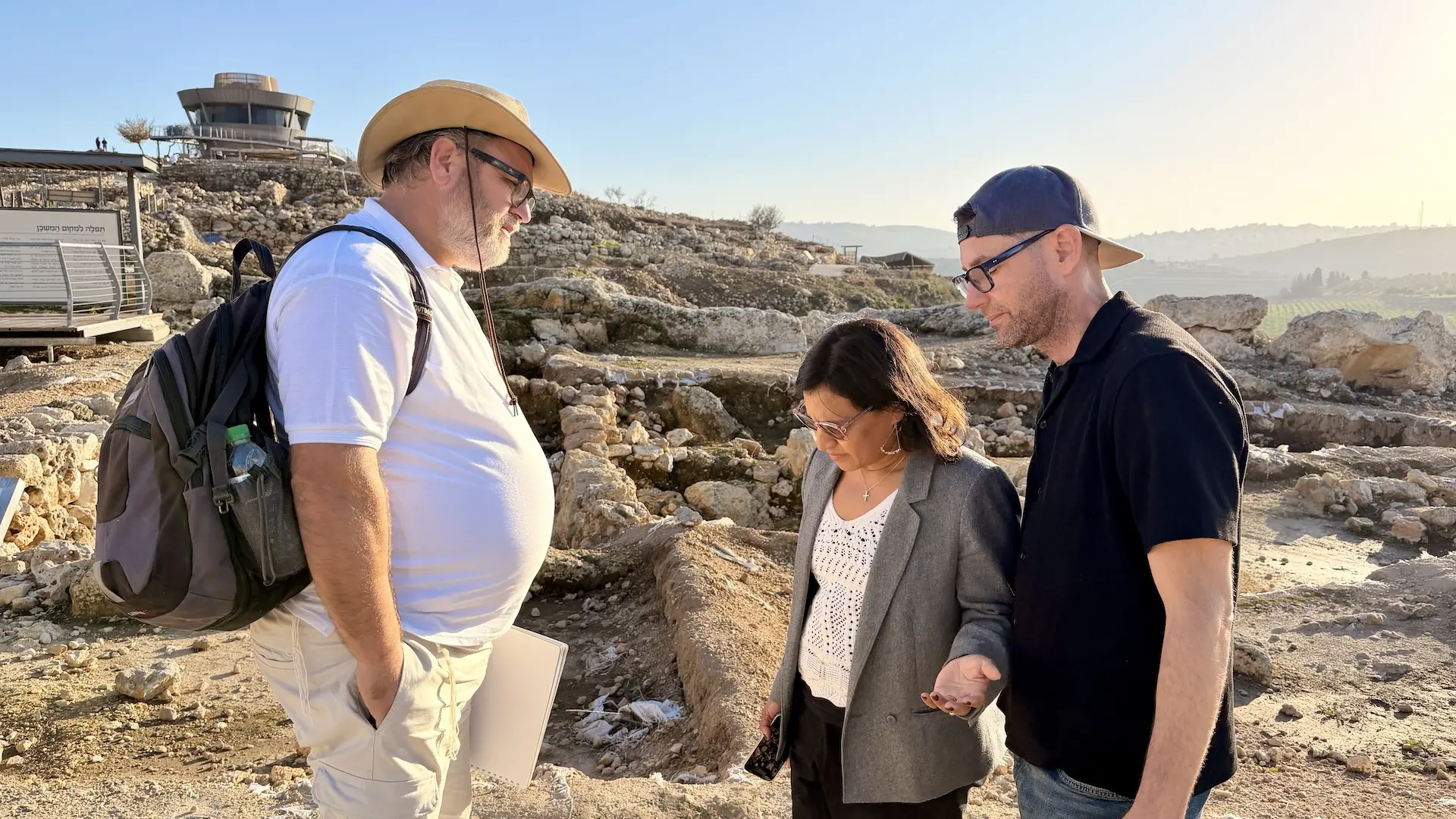
Recently, I stood at ancient Shiloh reporting a story about people who still come here to pray.
And I found myself thinking about the remarkable continuity of it all.
People change.
Empires rise and disappear.
Languages evolve. Governments come and go. Civilizations leave behind pottery, walls, coins, ruins and enough archaeological arguments to keep academics gainfully employed for generations.
But human beings still come before God carrying essentially the same things.
Grief.
Hope.
Children.
Loss.
Fear.
Longing.
And prayers.
Before Jerusalem, There Was Shiloh
Long before Jerusalem became the center of Jewish worship, Scripture tells us that the Tabernacle stood at Shiloh.
This was where the tribes of Israel gathered. This was where sacrifices were offered. This was where the Ark of the Covenant rested.
And this was where Hannah prayed.
Today, ancient Shiloh sits among the hills of Samaria. Archaeological excavations continue to uncover evidence of the communities that lived here thousands of years ago.
Eliana Passentin of the Binyamin Regional Council explained to me why archaeologists identify the site with biblical Shiloh.
“We’re smack in the center of ancient Shiloh,” she said. Archaeologists, she explained, hope to find several things when identifying an ancient biblical site, including inscriptions, archaeological evidence and preservation of the ancient name. “And here we found all three,” she said.
For a journalist, that alone makes Shiloh fascinating.
But archaeology only tells part of the story.
Because people are not simply coming here to look at old rocks.
They are coming here to pray.
Hannah Was Here
Moriyah Shapiro grew up at Shiloh. Her family arrived in 1978, when, as she remembers it, the area was largely empty.
Her family was part of a group determined to rediscover ancient Shiloh and rebuild Jewish life around it.
Today she watches visitors arrive from across the world.
“People come here from all over the world to pray in the place where Hannah actually prayed,” she told me.
That sentence is easy to read quickly.
Don’t.
Think about it.
A woman prayed here roughly three millennia ago.
We know her name.
We know what she wanted.
We know how badly she wanted it.
We know the anguish she carried into her prayer.
And we know what happened afterward.
Now other women stand on the same ground carrying some of the same prayers.
One story Eliana told me began 32 years ago.
A woman named Hannah came from Miami to Shiloh and prayed for a son.
Nine months later, according to Eliana, she gave birth to a boy.
She named him Samuel.
Yes, really.
Years later, another generation of the same family returned.
The woman’s daughter had struggled to become pregnant naturally and had prayed at Shiloh for children.
Eventually she returned carrying twins.
“She said, ‘I prayed for a boy and a girl. This is my boy and this is my girl,’” Eliana recalled.
It’s the sort of story that makes a journalist instinctively reach for the brakes.
Because Christians can sometimes be a little too eager to package mystery into a three minute testimony with inspirational music underneath it.
Prayer does not work like a vending machine.
Insert faith.
Select miracle.
Collect blessing.
God has never agreed to that arrangement.
And neither has Eliana.
“The moral of the stories is not come to Shiloh, touch the stones and you’ll be cured,” she told me.
Thank God.
Otherwise we would have to install a gift shop next to the miracle rocks and things would get weird very quickly.
Instead, Eliana pointed toward something much more difficult.
Humility.
“When we speak to God from a place of humility,” she said, we do not approach Him like “an ATM machine.”
That might be one of the best descriptions of prayer theology I have heard in a while.
The Prayer That Wasn’t Answered The Way We Wanted
One of the women I met at Shiloh was Carolyn Burns.
For her, Hannah’s story is not abstract theology.
It intersects with grief.
Carolyn described her son Easton as a miracle child who came into their family “after a season of loss.”
“I’ve prayed Hannah’s prayer for our family because I knew our family wasn’t complete,” she told me.
Then she said something that gets closer to the heart of Hannah’s story.
“God saw her. And God hears our prayers.”
That matters because the biblical story is not simply that Hannah asked for something and got it.
Before the answer came, there was anguish. There was waiting. There was misunderstanding.
There was surrender.
And there was no guarantee Hannah would receive the answer she desperately wanted. That is the uncomfortable part of prayer.
Some prayers are answered exactly as we hope.
Others are not.
Some answers arrive nine months later.
Others take decades.
Some never arrive in the form we asked for.
Faith is not pretending otherwise.
The mystery of prayer is that Christians believe God hears us even when His answer is not the one we wanted.
Hannah’s great act of faith was not simply asking God for Samuel. It was entrusting Samuel back to God.
The Same God
Another visitor I met, Kamesh Flynn from the United Kingdom, had come to Shiloh with her family.
While they were praying, something unexpected happened.
Her 10 year old son turned to her afterward and said, “Mom, I think I was saved right then when we were praying.”
For Kamesh, the moment connected the biblical landscape beneath her feet with the faith she practices today.
“The same God that Hannah prayed to then is the God we serve now,” she told me.
That is ultimately what stayed with me after leaving Shiloh.
Living in Israel does something strange to your reading of Scripture.
Distances shrink.
Place names become actual places.
Jerusalem isn’t merely the city where David reigned. It’s where I buy groceries.
The Mount of Olives isn’t simply where Jesus taught His disciples. It’s a place where traffic can make you question several fruits of the Spirit simultaneously.
And Shiloh isn’t merely the setting of First Samuel.
You can stand there.
You can look across the hills.
You can imagine families making their way toward the Tabernacle.
And somewhere among them was a woman named Hannah carrying a prayer that nobody else could fully understand.
Three thousand years later, people are still arriving with prayers of their own.
Archaeology can uncover walls, pottery and ancient civilizations.
It can help us understand where people lived and how they worshiped.
But archaeology cannot excavate prayer.
That belongs to another realm entirely.
At Shiloh, the stones point backward.
Prayer points upward.
And the testimonies of people like Carolyn, Kamesh and the two generations of one family from Miami invite us to consider something much more personal than whether the Bible happened here.
They invite us to ask whether the God of the Bible is still listening now.
Kamesh put it simply.
“I implore you to bring your requests, make them known to a God who’s living and breathing, and as alive and willing to answer them as he was 3,000 years ago today.”
Maybe you will never make it to Shiloh.
That’s fine.
Eliana would probably be the first to tell you that God does not require an Israeli postal code to hear your prayers.
You don’t need Hannah’s stones.
You need Hannah’s humility.
You need the courage to bring God the thing you desperately want while still trusting Him enough to decide what happens next.
That is harder than religious tourism.
It is also faith.
And three thousand years after Hannah poured out her soul at Shiloh, people are still trying it.
Keep reading
Browse all writing →
Happy New Year. Iran Is Reloading.
Nothing says Happy New Year quite like ballistic missiles.
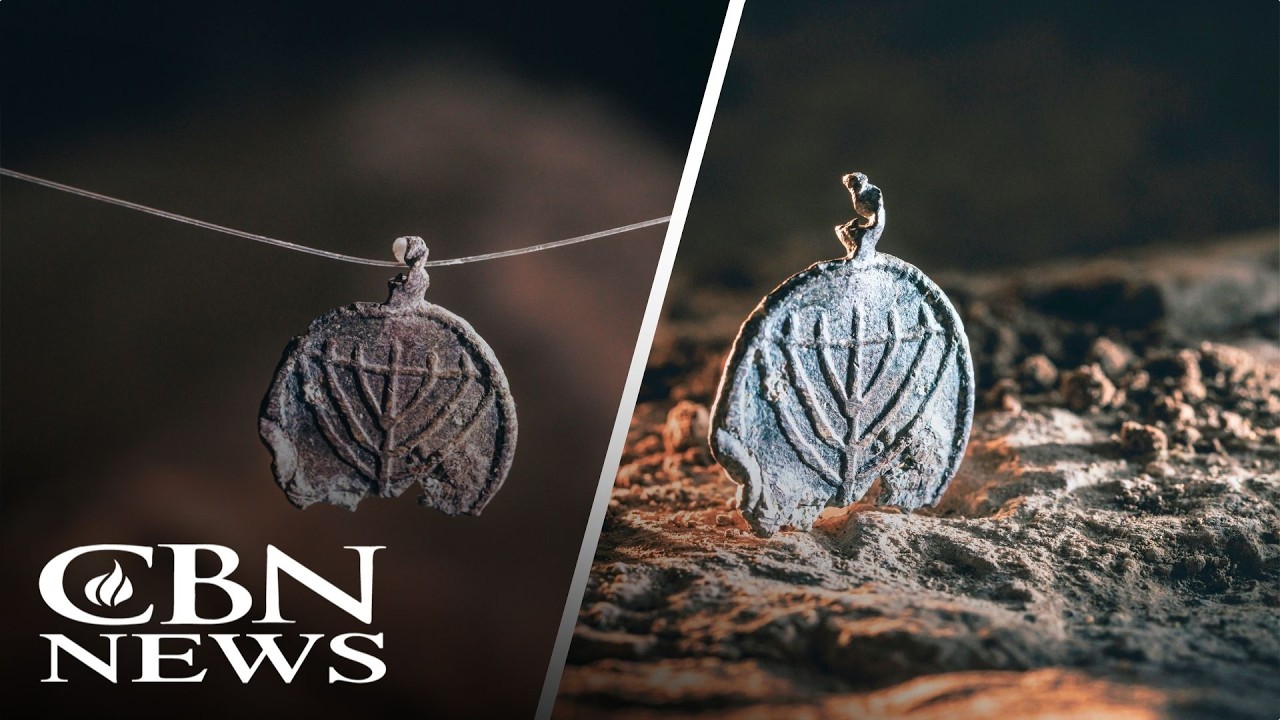
A Tiny Menorah and a Very Long Memory
A 1,300 year old lead pendant found beneath the Temple Mount carries a menorah on both sides, and a story that outlasted empires.
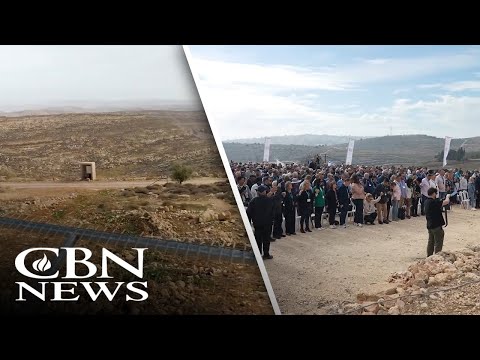
1,000 Pastors Visit Judea and Samaria in What Could Mark a Historic Turning Point for the Church
Reporting from ancient Shiloh, I joined more than 1,000 pastors and Christian influencers exploring the biblical heartland and its significance for the Church and Israel.
More from Jerusalem
A Tiny Menorah and a Very Long Memory
1,000 Pastors Visit Judea and Samaria in What Could Mark a Historic Turning Point for the Church
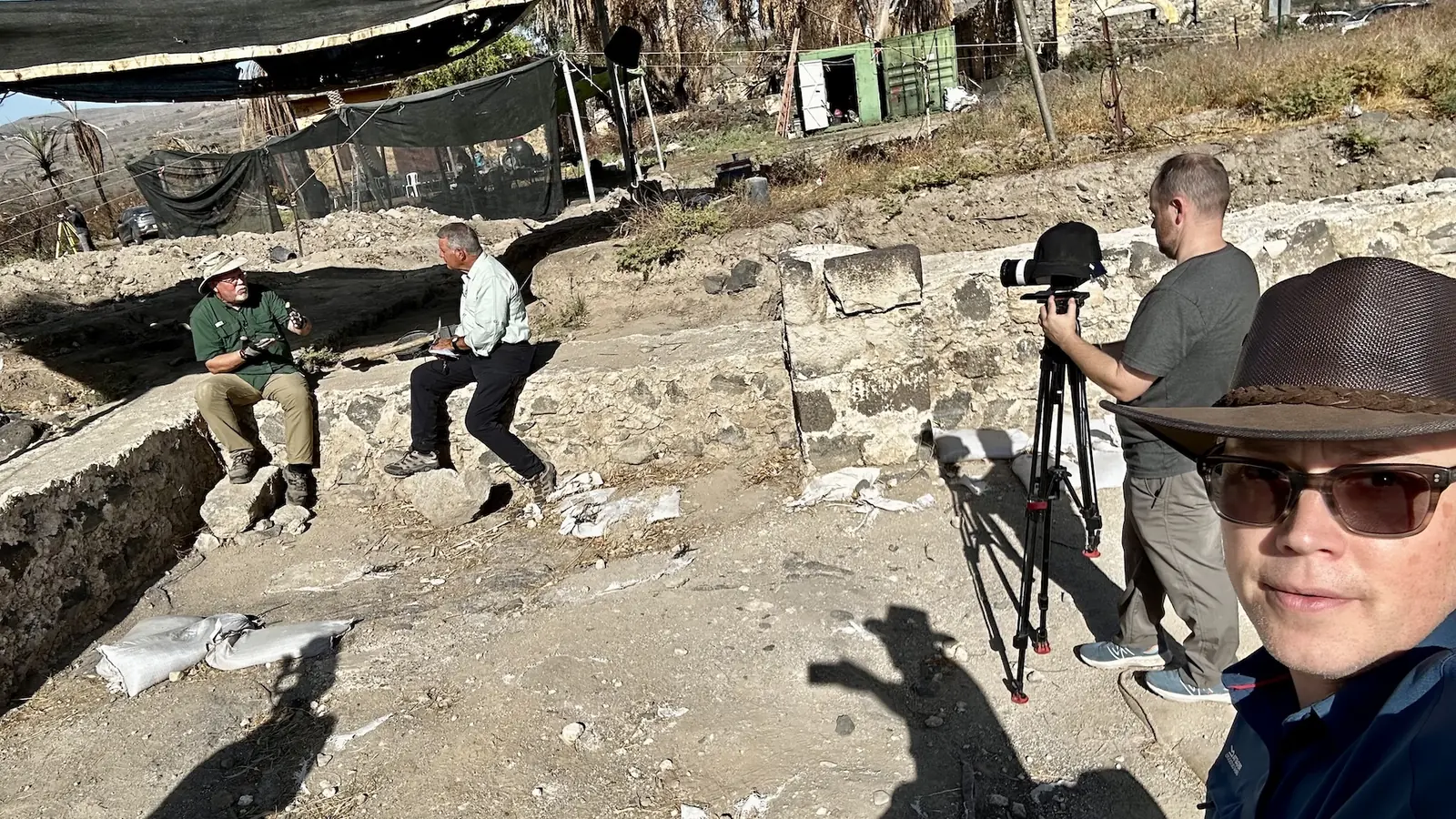
The Stones Still Speak: Beauty From Ashes at Bethsaida