Israel's Economic Renaissance: Why One American Investor Is Betting Big on the Jewish State
From Tel Aviv, Joshua Swanson explores why Michael Fertik is betting on Israel’s innovators and the resilience driving its economic renaissance.
By Joshua Swanson | Jerusalem, Israel
There is something remarkable happening in Israel right now. And if you spend all your time watching the headlines, you might miss it.
For more than two years, Israel has been fighting a war on multiple fronts. Rockets have threatened its cities, hundreds of thousands of reservists have been called away from their families and careers, and an entire nation has endured unimaginable grief since the Hamas attacks of October 7, 2023.
Yet, against almost every conceivable economic headwind, Israel's technology sector continues to innovate, attract investment, and build companies that are shaping the future.
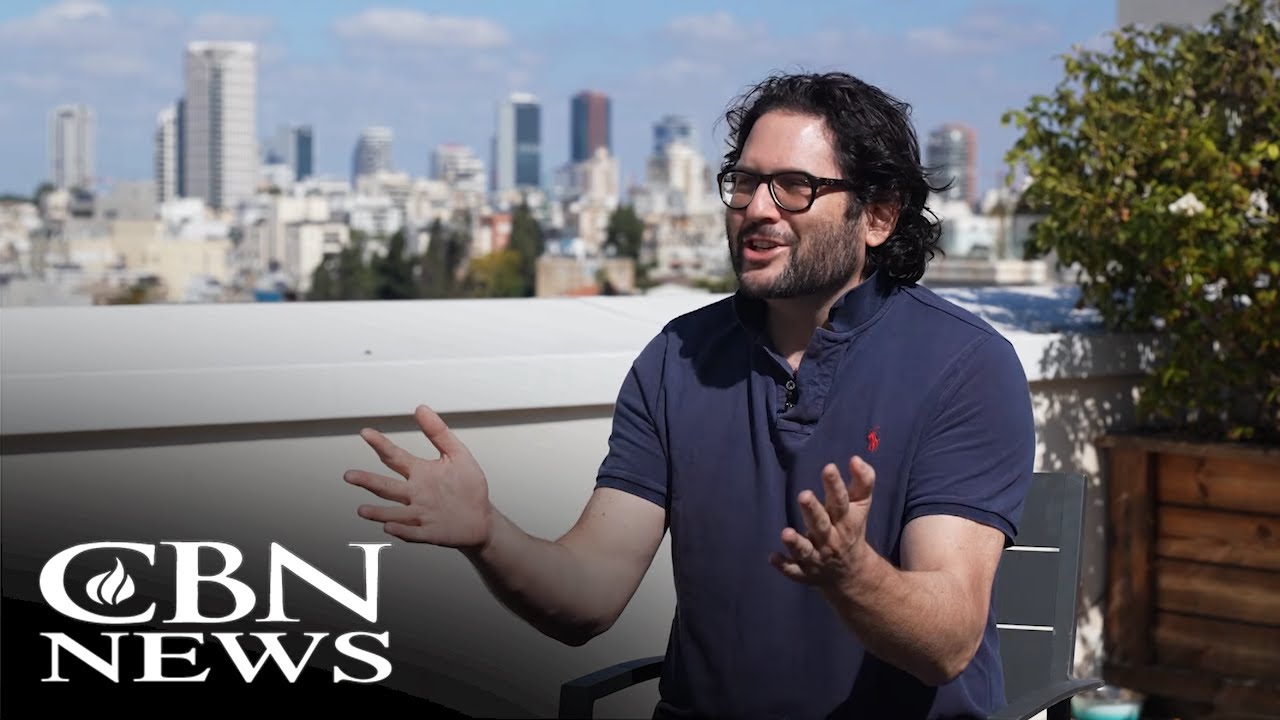
I recently sat down in Tel Aviv with American entrepreneur and venture capitalist Michael Fertik, founder of Reputation.com, to discuss what is happening inside Israel's economy. I've interviewed my share of optimistic entrepreneurs over the years, but Michael's enthusiasm for Israel was on another level.
He wasn't simply bullish on Israeli technology. He believes we are witnessing an economic and technological transformation of historic proportions.
"This is the Cambrian explosion," Fertik told me, borrowing a term from evolutionary biology that describes an extraordinary period of diversification and development.
He went even further, comparing today's Israel to one of the most creative and influential periods in human history.
"If you're looking for Florence in the 21st century, you're sitting here."
Think about that for a moment.
Florence was the birthplace of the Renaissance, a city that helped reshape Western civilization through extraordinary advances in art, science, engineering, and human thought. Fertik believes something similarly transformational is unfolding in Israel, only this time through artificial intelligence, cybersecurity, advanced computing, and technologies we have yet to fully imagine.
And here's the remarkable part. It's happening during a war.
Investing in Israel Because It Makes Sense
One of the most interesting moments in my conversation with Michael came when I asked him about his investment philosophy.
Fertik began investing in Israeli companies in 2015. Since then, he has built a venture capital portfolio of approximately 65 companies, with roughly 15 based in Israel. That represents a substantial commitment to a country with a population of just over nine million people.
Naturally, I wanted to know what motivated him.
His answer was refreshingly direct.
"I'm a very public Zionist. I'm a very overt Zionist. But I don't invest here because I'm a Zionist. I invest here because I'm a capitalist."
That statement stuck with me.
As someone who lives in Jerusalem and believes deeply in Israel's future, I'm accustomed to hearing people express their support for the Jewish state through the language of faith, history, and shared values.
All of those things matter tremendously to me.
But Michael was making a different argument. He believes investing in Israel is simply good business.
He sees extraordinary talent, exceptional innovation, and a culture of perseverance that produces results despite enormous obstacles.
"They do it every day with fewer resources," he told me, describing Israeli entrepreneurs building businesses while confronting the challenges of war and regional hostility.
"They persevere."
For Fertik, Israel's success isn't dependent on favorable circumstances. In many ways, the country's challenging circumstances have helped produce a generation of entrepreneurs who are exceptionally resourceful, adaptable, and determined.
It's an observation that resonates with what I've experienced living and reporting in Israel.
Israelis have an extraordinary ability to confront a crisis, adapt almost immediately, and somehow continue moving forward.
Sometimes that means moving a business meeting into a bomb shelter. Other times, it means taking a call with an investor between military assignments.
Which brings me to another remarkable story Michael shared.
Building Companies on the Battlefield
On October 7, 2023, Israel suffered the deadliest attack against the Jewish people since the Holocaust.
Two days later, as the country began mobilizing for war, Fertik made a public declaration.
He was going to invest more money in Israel.
"On October 9th, two days later, I was publicly announcing that I'm going to invest more in Israel. Now is the time to invest more," he recalled.
Most investors instinctively pull back when uncertainty increases. War, political instability, and regional conflict are hardly the conditions typically associated with aggressive venture capital investment.
Michael did the opposite.
He saw an opportunity to support exceptional entrepreneurs at a moment when their country needed economic confidence.
Perhaps the most extraordinary part of our conversation came when he described speaking with Israeli founders who were simultaneously serving in the military.
"I've been talking to guys who are in Gaza on their personnel carriers from Zoom in the middle of fighting, taking a pause, talking about their companies, talking about the developments."
I had to think about that image.
Imagine being in the middle of a war, responsible for the lives of the soldiers around you, while also trying to build a company capable of competing in the global economy.
For most of us, keeping a business running during a difficult quarter is stressful enough. These entrepreneurs are managing their companies between combat operations.
It's an extraordinary illustration of the Israeli mindset.
The future doesn't wait for circumstances to become convenient.
And apparently, neither do Israeli entrepreneurs.
The Numbers Behind the Optimism
Of course, optimism alone doesn't build an economy.
The numbers matter.
At the time of our reporting, Israel's TA 125 stock market index had risen approximately 55 percent over the previous year, an extraordinary performance for a nation confronting prolonged military conflict.
Prime Minister Benjamin Netanyahu expressed similar confidence in Israel's economic trajectory, pointing to the country's ability to emerge from the COVID pandemic and withstand the economic pressures of war.
He emphasized continued investment in cybersecurity, artificial intelligence, and other emerging technologies.
But beyond the stock market, Israel's real economic strength lies in its ability to transform ideas into globally competitive businesses.
Michael pointed to his own investment history as evidence.
His first venture investment in Israel was in SentinelOne, the Israeli founded cybersecurity company that eventually went public on the New York Stock Exchange.
That early success helped establish a conviction that has only strengthened over the past decade.
"I think Israel is going to be an enormously important part of any serious investment portfolio," he told me.
That is a remarkable statement coming from an investor who focuses his investments on just two countries: the United States and Israel.
He is effectively placing the tiny Jewish state alongside the world's largest economy as a primary destination for his capital.
More from Michael Fertik
An Ancient Culture Creating Tomorrow's Technology
During my reporting, I also visited NEXTSilicon, an Israeli technology company working to reinvent high performance computing.
Its CEO, Elad Raz, is developing technology designed to accelerate scientific computing and artificial intelligence.
When I asked him why Israel produces so many successful technology companies relative to its population, his answer went beyond venture capital, military training, or government investment.
He pointed to something much older.
Jewish tradition.
"I think that part of it is from the Jewish tradition," Raz explained, describing the emphasis on teaching children the Torah, learning, and education.
I found that fascinating.
Here we were discussing the future of supercomputing and artificial intelligence, and the conversation kept returning to something deeply rooted in the Jewish people's history.
The value of learning.
The discipline of questioning.
The expectation that each generation will study, challenge, discover, and pass its knowledge to the next.
For centuries, Jewish communities cultivated those traditions under circumstances far more difficult than anything most of us can imagine.
Today, those same cultural instincts are helping fuel one of the world's most dynamic innovation economies.
I don't believe we should oversimplify Israel's success or pretend that every technological breakthrough can be traced directly to a biblical principle. There are plenty of practical explanations for Israel's entrepreneurial achievements, including world class universities, military technology experience, international investment, and a willingness to take risks.
But I also think it would be a mistake to ignore the enduring influence of Jewish history and culture.
After all, the story of Israel has always involved a remarkable tension between adversity and perseverance.
A Nation That Refuses to Stop Building
Living in Israel gives you a different perspective on resilience.
You see it in the families who continue celebrating Shabbat despite the uncertainty around them. You see it in reservists returning home and immediately resuming their responsibilities as parents, employees, and entrepreneurs. You see it in the construction cranes that continue reshaping Tel Aviv's skyline.
And you see it in the founders who refuse to abandon their dreams, even when their country is fighting for its security.
Michael offered perhaps the strongest description of this attitude during our conversation.
"There is no population that's more resilient, more forward thinking, more self-reliant, more optimistic, more relentlessly optimistic than Israelis."
Relentlessly optimistic.
I love that phrase.
Not because Israelis are oblivious to the dangers surrounding them. Quite the opposite.
They understand those dangers better than most.
But they refuse to allow those dangers to define their future.
That is an important distinction.
Optimism rooted in ignorance is fragile. Optimism forged through adversity is something else entirely.
It's a determination to build tomorrow while confronting the realities of today.
And for a nation whose modern history includes repeated wars, terrorism, economic challenges, and constant geopolitical pressure, that determination has become one of its greatest assets.
More Than an Economic Story
As I reflected on my conversation with Michael, I kept returning to the larger significance of what we are witnessing.
Israel is far from perfect. Its economy faces real challenges, including the financial burden of prolonged war, workforce disruptions, political uncertainty, and the difficult task of rebuilding communities affected by the conflict.
Those realities should not be minimized.
But neither should the extraordinary achievements happening alongside them.
For those of us who view Israel through the lens of biblical history, there is also something deeply moving about watching the Jewish people continue to build, innovate, and flourish in their ancestral homeland.
I am reminded of the biblical image in Isaiah 65:21: "They shall build houses and inhabit them; they shall plant vineyards and eat their fruit."
I don't cite that verse as an economic forecast or suggest that every successful Israeli company represents the fulfillment of biblical prophecy.
But the image of a people building, planting, and creating a future in their own land carries a particular significance when you live here.
What strikes me most is that Israel's remarkable achievements aren't occurring because the road has been easy.
They are happening despite the obstacles.
And perhaps that is what makes this moment so extraordinary.
Michael Fertik believes the world is witnessing the beginning of an Israeli Renaissance.
After listening to him, meeting innovators like Elad Raz, and watching the remarkable perseverance of the people around me, I understand why.
Israel isn't waiting for the world to become more peaceful before investing in tomorrow.
It is building tomorrow today.
And if Michael is right, the most extraordinary chapters of Israel's economic story may still be ahead.
Joshua Swanson is a Jerusalem based journalist and producer with CBN News, covering Israel, faith, culture, and the stories shaping the Middle East.
Keep reading
Browse all writing →
A Voice From the Desert: The Great Isaiah Scroll and the Caves of Qumran
Standing before the Great Isaiah Scroll and hearing Dan Farkash describe his priestly connection to Qumran made these stories deeply personal for me.

UK Terror Plot Suspects Out on Bail as Trump Denies Iran Offer
Five suspects arrested near a British air base used by American bombers are out on bail, drawing a sharp response from President Trump, as Washington and Tehran trade messages over a possible nuclear agreement. Aired on The 700 Club.

Dead Jew, No News? A Yom Kippur Attack and the Stories the World Misses
Two attacks in two days left an Israeli father dead and a reservist fighting for his life. The violence was real. So was the silence surrounding it.